

Why your fields need sulfates and how to apply them
Sulfur is important for all forms of life, as it is a building block in the structure of three amino acids: methionine, cystine and cysteine. These amino acids are part of 99% of known proteins found in bacteria, fungi, higher plants and other living creatures, including humans. Without sulfur, the formation of protein compounds, which are the basis of life on the planet, is impossible. Therefore, it is not surprising that without sulfur, the agrarian cannot count on a good harvest either. In this article, we will talk about the benefits of this element in agriculture, how to identify symptoms that signal a lack of sulfur in your field, and what to do about it.
USEFUL PROPERTIES AND ADVANTAGES OF APPLICATION IN AGRICULTURE
Since sulfur and nitrogen are needed to build proteins in plants, there is a close relationship between them. Plant proteins contain a lot of sulfur. In addition, sulfur:
- participates in the formation of chlorophyll, synthesis of oils and other important processes of plant vegetation;
- depending on the soil and climatic conditions, it provides a yield increase of up to 20%;
- promotes the release of phosphorus, potassium, calcium, magnesium, iron and other elements in the soil solution, increasing their availability for plants and increasing the effectiveness of applied fertilizers;
- increases the stress resistance of plants, affects the content of chlorophyll in the leaves, which contributes to the formation of lignin, which strengthens plant tissues;
- increases the resistance of crops to lodging, damage by diseases and pests;
- works as an immunostimulant, especially when the plant comes out of a stressful state.
The total sulfur content in the soil is determined by humus reserves and ranges from 0.001 to 0.5%. At the same time, 70–90% of sulfur is contained in organic form, which is difficult for plants to absorb. In order for it to become available to plants, it is necessary to transform the element in the direction of mineralization with the participation of microorganisms of the genus Thiobacillus thiooxidans, during which the sulfate form of sulfur is released, which is absorbed by the plant. However, the mineralization process is too slow (due to the low level of temperature, humidity, soil aeration), which does not allow the culture to get the amount of sulfur it needs. This is evidenced by the following figures: soils with 1% organic matter can release sulfur at a rate of 3.6 kg/ha/year. The resulting deficit must be compensated by the introduction of sulfur-containing mineral fertilizers.
CONSUMPTION AND PRODUCTION
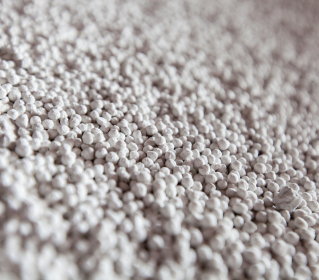
Ammonium sulfate has the highest percentage of sulfur content compared to other complex fertilizers – not less than 24 %. The main advantages of this fertilizer are its chemical resistance and low hygroscopicity, as well as its easily accessible form for plants, which enables them to absorb sulfur immediately after application.
Why your fields need sulfates2 In Ukraine, ammonium sulfate is produced in large volumes, but only a few manufacturers can offer a quality product. Thus, the company "Ukrainian Mineral Fertilizers" specializes in the production of granular ammonium sulfate, the quality of which corresponds to imported analogues. The production complex performs granulation of fertilizers according to European technologies. It is equipped with modern automated equipment of the Japanese-German holding Hosokawa Alpine, which has more than 100 years of experience in this field.
The main difference of the new manufacturer was that ammonium sulfate undergoes two stages of purification at the company's plant.
According to the company's representatives, the ammonium sulfate produced by it contains 21% nitrogen, 24% sulfur and no impurities of other substances, which confirm the conclusions of the Swiss expert company SGS, Ukrainian laboratories and scientific institutes. The product has increased strength of granules, which are not inferior to the best world samples in terms of chemical composition, size, friability and speed of dissolution.
It is also important that this type of fertilizer is produced in Ukraine and from Ukrainian raw materials, and therefore, no import restrictions affect the provision of sulfur-containing nitrogen fertilizers to farmers.
HOW TO DETECT SULFUR DEFICIENCY
Lack of sulfur affects the quantity and quality of the harvest. It is difficult to visually diagnose a sulfur deficiency in a plant, because it is similar to nitrogen starvation: yellowing of leaves (chlorosis), elongation and thinning of stems, and slowed development are observed. So farmers often confuse sulfur and nitrogen starvation.
To correctly determine the lack of sulfur, pay attention to the leaves. Chlorosis on young leaves with sulfur deficiency is explained by the fact that it cannot move from the lower tiers to young shoots like nitrogen. With a lack of nitrogen, the lower leaves fall off, and sulfur deficiency leads only to paleness and yellowing, but not to leaf fall. Since it is difficult to visually distinguish between sulfur and nitrogen deficiency in many field crops, plant tissue analysis should be carried out for this purpose.
Other specific symptoms of sulfur deficiency:
- chlorosis of young leaves or necrosis of the tips of pale green leaves;
- small and spindle-shaped (frail) growth with short stems;
- delay in plant development and maturity;
- poor nodulation in legumes, accompanied by incomplete fruit ripening and undesirable N/S ratio in plants.
Most often, sulfur deficiency is observed on soils with a low content of organic matter (humus), weathered soils with a high iron content, and on soils of light granulometric composition (sandy, gray, sod-podzolic). Such soils are typical for the north and south of Ukraine.
Sulfur naturally present in the soil at the beginning of the season is easily washed into the lower layers or lost with surface runoff, especially in rainy spring. Losses can reach 50%. This can be remedied by applying sulfur-containing mineral fertilizers. For example, sulfur, which contains ammonium sulfate, is applied without loss when dissolved on the soil surface due to the bound state of this element in the fertilizer granule.
DETERMINATION OF THE NEED IN THE HEART AND THE FEATURE OF AMMONIUM SULFATE APPLICATION
The need for sulfur varies significantly for different crops. Sulfur content in completely dry matter of plants is usually from 0.1 to 1.0% (based on the element).
It is also important to remember that plants' need for sulfur changes during the growing season. For example, rapeseed's maximum need for sulfur is observed in the phase of flowering and seed formation. Absorption of sulfur by corn occurs at a constant rate throughout the growing season. At the same time, more than 50% of the sulfur accumulated by the plant accumulates in the grain. Wheat plants can lose up to half of the accumulated sulfur between the phases of flowering and ripening.
The most sensitive to the application of sulfur-containing fertilizers are cruciferous crops: spring and winter rape, oil radish, white mustard. Potatoes, legumes and grain crops, mainly winter crops, are also sensitive.
According to the amount of sulfur consumed per unit of the main crop (seeds, grain, tubers, roots), agricultural plants are divided into three groups in descending order of needs:
- very high need (very sensitive) – 50–70 kg/ha: rape and cabbage plants;
- high demand (sensitive) – 25–40 kg/ha: beets (sugar, fodder), potatoes, tomatoes; butterfly fodder - legumes, soybeans, grain ears, corn;
- average - less than 20 kg/ha: fodder grains, grasses.
For potatoes, ammonium sulfate is most effective when applied to the soil in the spring in the recommended doses for nitrogen (450–600 kg/ha of ammonium sulfate against the background of organic fertilizers). The fertilizer is also suitable for the first early spring top dressing at the beginning of the recovery of vegetation of winter rapeseed and wheat. When fertilizing winter rape in the spring, at the beginning of the growing season, the dose of ammonium sulfate should be 300 kg/ha. Another 40 kg/ha d.r. nitrogen must be supplemented with urea or KAS. When carrying out the first early spring fertilization with nitrogen of winter wheat, 150 kg/ha should be applied in the form of ammonium sulfate, and 20–40 kg/ha d.r. nitrogen must, again, be supplemented with urea or KAS.
The use of nitrogen-sulfur-containing fertilizers provides an increase in the yield of agricultural crops compared to standard liquid fertilizer KAS - depending on the soil and climatic conditions, up to 20% increase in yield.


